
Dan Ahwa, Creative Director for New Zealand Fashion Week
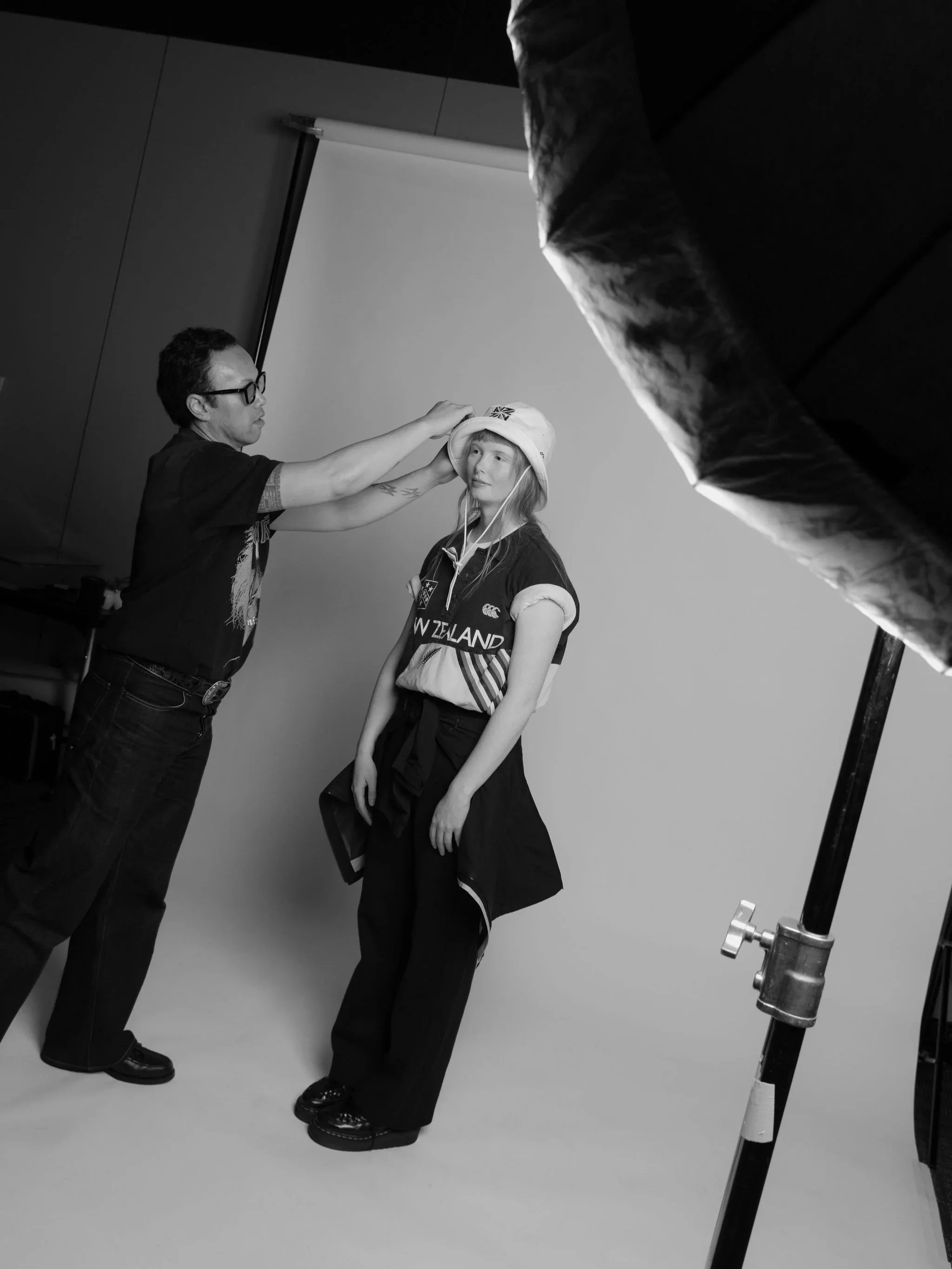
When I was asked to reflect on New Zealand Fashion Week 2026, my mind wandered back to my first experience of the event in 2004, and a younger, wide-eyed version of myself standing in the nosebleeds at what we knew simply as ‘the tents’ along Halsey Street. The former America's Cup sheds had been transformed into a microcosm of the best New Zealand fashion had to offer, thanks in no small part to Dame Pieter Stewart's tenacity and belief in celebrating an industry that wasn't always taken seriously.
As a student, emerging stylist and journalist, I spent much of that time assisting, on my hands and knees taping shoes, moving clothing racks and helping backstage teams with whatever needed doing because that’s what you did when you were starting out. It was an education, and an early understanding that fashion is as much about the people behind the scenes as it is about what happens on the runway.
Twenty-two years later, I could never have imagined returning as Creative Director and serving as a custodian alongside a small but dedicated group of people who have also grown up with the event and contribute to it in their own immense ways, and who also deserve recognition for the work they put in to keep the event moving forward.
Ehara taku toa i te toa takitahi, engari he toa takitini.
My success is not mine alone, but the success of many.
Because this is what attracted me to the role in 2025 - the opportunity to work with people who understand the industry and believe in its potential. Since relaunching NZFW, owner Feroz Ali and Executive Director Liam Taylor have done more than revive the event. They've made it relevant to the times, assembled a thoughtful team and given people the freedom to do what they do best, while creating pathways for the next generation of industry professionals to feel seen and heard.
One of the most encouraging developments this year was the dialogue between emerging and established designers. When I was starting out, knowledge was often guarded, and access depended on who you knew. I'd like to think my generation has learned from that experience. How do we support emerging talent without prescribing what success looks like? And how do we remain open to what younger creatives can teach us? Afterall, the tuākana-tēina relationship works both ways. It's an exchange of knowledge and perspective fundamental to our industry's future. I never go into a room thinking I know everything.
Having spent much of my career working closely with designers, I've witnessed the realities of building a fashion business in this country. From store openings, collection launches, product category debuts to restructures, economic uncertainty and a global pandemic, I've heard their frustrations, celebrated their wins and helped them connect with an audience. Many I’ve seen morph from small start-ups to global players. Connecting people is what makes working for an event like this special - because there's no place for gatekeeping in an industry that needs to work harder to sustain itself, and certainly no room for ego.
What became clear in 2026 was the importance of making people feel they belonged. Designers are central to Fashion Week, and so too are our partners, audiences, media, retailers, entertainers, models, hair and makeup artists and production crews. These aren't simply transactional relationships. To me, these are all collaborators who are essential to the event's success.
So, what did 2026 reveal about fashion in Aotearoa? Well, it was a year of contrasts.
We lamented the winding down of much-loved labels, including Jimmy D, Rachel Mills, Wynn Hamlyn, Asuwere and Sylvester. Their decisions reflect not only a difficult economic climate, but in some cases, a desire for a life beyond work, the latter resonating deeply with me.
Yet we also welcomed excitigly new and highly personal perspectives: Makaira Lee's By Kai, Daina Hugh by Lavinia Ilolahia and Herbert Label by longtime retailer Rickie Dee all creating collections that feel like extensions of themselves. I took my own modest step into this space with Archive by Dan Ahwa, a made-to-order menswear project. All of these new ideas are reconsidering how fashion is designed, produced and consumed, favouring closer relationships with customers.
2026 was about evolution too. Natalie Robb's Āhuru elevated our craft communities in a way that felt like natural progression, Marle's expansion into menswear, Cailtin Crisp's acquisition of Christchurch institution Corso Merivale, and Kowtow's introduction of childrenswear demonstrate that longevity requires a willingness to challenge assumptions and continue to adapt.
I'm equally encouraged by designers reflecting the cultural diversity of contemporary Aotearoa. At Christchurch Spring Fashion Festival, a fashion presentation celebrating a century of sporting connections between India and New Zealand became an unexpected opportunity to explore how New Zealander’s will forever be inspired by a passion for sportswear. The experience introduced me to South Asian labels including Mitti Clothing, founded by Mumbai-born Yash Redkar, and Brown Brand, established by two New Zealand-raised brothers of Punjabi heritage.
Alongside East Asian, South Asian, Southeast Asian, Māori, Pacific and Chinese brands, these businesses remind us that New Zealand fashion has never belonged to a single cultural narrative. Our diaspora communities contribute enormously to our national identity, and our industry is richer when their perspectives are visible. NZFW has an important role in celebrating this intersection of cultures and giving it a stage to shine.
We've also been determined to meet designers where they are, rather than insist every brand produce a runway show. An intimate presentation or small activation can be just as meaningful, sometimes even more so for the impact of its intimacy. Fashion businesses operate differently, and the event hopefully reflects that. While our group shows have proven a popular formula with the public who are buying tickets (and ultimately buying the clothes), they continue to be platforms that foster community with designers, many from both The New Guard and Studio shows this year had never met in person before. That kind of supportive environment is important when much of the creative process of a group show is reliant on some level understanding that, yes, you will need to share resources to make this work. To the designers who embraced on that challenge and learned something along the way – thank you.
Our opening showcase, The Art of Style held at the HQ of our highly collaborative and creative presenting partner Giltrap Group, demonstrated what happens when fashion intersects with ballet, opera, music and film. In an election year, when the arts need greater visibility and support, creating a shared cultural moment felt particularly important. It's a direction we'll continue to pursue in 2027. After all, the measure of a functioning society is not simply its economic success, but how it values its creative sector and recognises the role of culture in shaping our identity.
It's also rewarding to see New Zealand creatives and brands thriving internationally, many having cut their teeth at NZFW before working with some of the world's most influential brands and pop-culture figures. Seeing them forge careers on their own terms on an international scale is something we should all feel proud of. Rory William Docherty’s stunning presentation at London Fashion Week, and international stockists for Porter James and Harris Tapper are just some of the highlights this year that are worth noting.
We must also keep asking difficult questions about what fashion communicates and its environmental impact. Sustainability should no longer be a marketing exercise, but a consideration embedded from the first concept to the finished garment.
As we look towards 2027, optimism alone isn't enough. Fashion Week must continue to evolve, creating genuine opportunities, encouraging collaboration and reflecting the changing realities of our industry. Having travelled the world and worked for international brands over the years, I’ve become much more embracing of home, and connected to the work produced from here. Part of that evolution is recognising that experience doesn't mean having all the answers. Success, I've come to realise, is as much about being willing to listen, accept criticism and remain open to new perspectives as it is about knowing what you're doing.
I think back to that young student in 2004, standing high in the rafters above the runway, full of enthusiasm and a sense of possibility at being part of something special. Twenty-two years later, what matters most to me is ensuring the next generation experiences that same sense of opportunity, but with fewer barriers in their way. Alongside an NZ Fashion Week team that genuinely believes in the potential of our industry, I hope we can continue to build a platform that supports its growth, not only creatively and commercially, but as a supportive community.
While last year we looked heavily to the archives to help contextualize what New Zealand fashion and a week dedicated to it even means now, this year’s impetus was to focus on advocating for creativity once again.
Next year, we’ll focus on improving on this with an even bigger and better event. Ultimately, the future of New Zealand fashion belongs to those willing to contribute to something bigger than themselves, to remain curious, to listen, to embrace feedback and to recognise that there is always more to learn.
Because creating something special isn't about having all the answers, but being open to what comes next.
And what’s more exciting than that?